

7 Signs Your Dog Needs Professional Behaviour Training
If daily life with your dog has started to feel like hard work, take heart: you’re far from alone, and it’s rarely a sign you’ve failed. Lots of loving, capable owners reach a point where the pulling, the not-listening or the anxiety is wearing them down. At The Mutts Nuts near Degilbo in Queensland, we help owners across the region turn these struggles around with calm, reward-based training. This guide walks through seven common signs that your dog would benefit from professional behaviour training, why they happen, and what actually helps, so you can decide whether it’s time to get a hand.
| Quick answer: Common signs a dog needs professional behaviour training include pulling hard on lead, ignoring recall, reactivity to people or dogs, separation anxiety, guarding, jumping and general over-arousal. If everyday life is getting harder despite your best efforts, structured, reward-based training, including residential board-and-train, can turn things around faster than going it alone. |
The 7 signs
1. Pulling hard on the lead
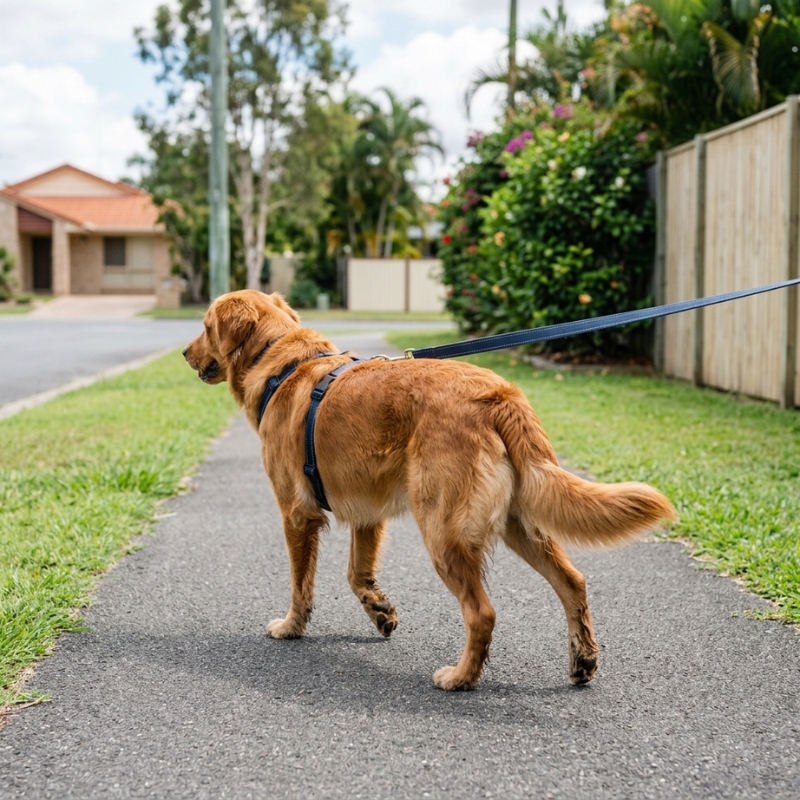
If walks have become a tug-of-war and your dog drags you down the street, that’s a clear sign the foundations need work. Constant lead pulling is uncomfortable and can put you both at risk, and it rarely fixes itself with time. Structured training teaches your dog to walk calmly beside you, which turns a daily battle back into something you both enjoy.
2. Ignoring recall
A dog that won’t come back when called, especially at the park or off-leash, is a safety issue as much as a frustration. If your dog treats “come” as optional, particularly around distractions, it’s worth addressing before it leads to trouble. Our piece on why your dog ignores commands at the park explains what’s often going on and why distractions win.
3. Reactivity to people or dogs
Barking, lunging or growling at other dogs or people on walks is one of the most stressful behaviours to live with, and it usually gets worse rather than better without help. Reactivity is often rooted in fear or over-arousal rather than aggression, and it responds well to calm, structured work with an experienced trainer who can read the dog.
4. Anxiety or separation distress
If your dog panics when left alone, barks or howls for hours, or is destructive when you’re out, that’s genuine distress rather than misbehaviour. Separation and general anxiety are hard on everyone, and they respond to calm, confidence-building support rather than telling off. Our guide on helping an anxious dog is a good place to start if this sounds familiar.
5. Resource guarding
Growling, stiffening or snapping over food, toys or space is called resource guarding, and it’s worth taking seriously and handling carefully. It can escalate if it’s ignored or mishandled, so professional, reward-based guidance is the safe way to work through it, rather than confronting the dog head-on and making the worry worse.
6. Jumping and no manners
A dog that jumps on visitors, barges through doors or has no off switch indoors isn’t being naughty; they’ve simply never learned the manners. These everyday behaviours are very trainable, and teaching a few clear, consistent expectations makes life at home far calmer for everyone, guests included.
7. General over-arousal
Some dogs seem permanently wound up, unable to settle and endlessly bouncing off the walls. Over-arousal makes everything else harder, because a dog that can’t calm down can’t learn well either. Teaching a dog to switch off and genuinely settle is often the foundation the rest of the training is built on, and it makes a huge difference at home.
Why these happen (briefly)
It’s worth knowing these behaviours usually aren’t your dog being difficult; they come from understandable causes. Often the early foundations were missed or never taught consistently, so the dog simply doesn’t know what’s expected of them. Inconsistency plays a big part too, since dogs struggle when the rules change from day to day or from person to person in the household. Under-stimulation is another common driver, because a bored, under-exercised dog often finds its own, less welcome, outlets for that energy. And for rescue dogs, a rough start or past trauma can leave lasting anxiety and real gaps in their learning. None of this reflects badly on you as an owner; it simply means the dog needs a clearer, calmer and more consistent approach than they’ve had so far.
What actually helps
The good news is that these behaviours respond well to the right approach, and that approach is consistent, reward-based training. Rather than punishment, which tends to increase fear and can make anxiety or reactivity worse, reward-based training builds the behaviours you want and gives your dog clear, calm guidance about what to do instead. Consistency is key, since dogs learn fastest when the rules and rewards stay the same every time and from everyone. Structure and routine help too, especially for anxious or over-aroused dogs who settle when life is predictable. For many owners, this is where professional dog behaviour training earns its keep, because a trainer brings the experience, consistency and calm handling that’s genuinely hard to maintain alone. Residential board-and-train can be particularly effective for busy owners or for anxious and rescue dogs, since the dog gets daily, structured work in a calm environment and comes home with the behaviours already taking shape, ready for you to keep up. Whichever route you choose, that combination of reward-based methods, consistency and structure is what turns things around.
Frequently asked questions
Can these behaviours be fixed?
In most cases, yes, they can be significantly improved with the right, consistent approach, though every dog is different. Reward-based training addresses the root of behaviours like pulling, reactivity and anxiety rather than just suppressing them. It takes patience and consistency, and some long-standing behaviours take longer, but real, lasting change is very achievable with the right help.
What’s the difference between a trainer and a behaviourist?
Broadly, a dog trainer focuses on teaching skills and manners like recall, lead walking and settling, while a behaviourist works with more complex emotional and behavioural issues such as serious anxiety or aggression. There’s overlap, and many everyday behaviours sit comfortably within skilled, reward-based training. If you’re unsure what your dog needs, a good trainer will point you in the right direction.
Is my rescue dog too far gone?
Almost certainly not. Rescue dogs often come with anxiety or gaps in their training from a tough start, but with patience, calm handling and consistency, they can make wonderful progress. It may take a little longer to build trust and confidence, but ‘too far gone’ is rarely the reality. The right support really does make a difference.
Final thoughts
If you recognised your dog in several of these signs, it’s not a verdict on you; it’s simply a sign that some structured help would make life easier for you both. Pulling, reactivity, anxiety and the rest all respond well to calm, consistent, reward-based training, and you don’t have to work it out alone. If everyday life with your dog has become harder than it should be, reach out about professional dog behaviour training, and we’ll help you turn things around, one step at a time.
| Book your dog in. Is life with your dog getting harder than it should be? Talk to us about professional behaviour training, and we’ll help you turn it around. |