

How to Help an Anxious Dog: Proven Calming Techniques That Actually Work
Watching a much-loved dog pace, pant, or hide can be heartbreaking. Anxiety looks different in every dog, yet the common thread is that it rarely fades on its own. Gentle, reward-based training can make a huge difference, but so can simple, daily adjustments to the way we exercise, feed and interact with our pets. This guide explains nine evidence-backed strategies you can try at home, how to spot the tipping point between mild worry and full-blown distress and when it is wise to seek professional dog training for more tailored help.
1. Start With the Right Type and Amount of Exercise
Regular exercise helps burn off physical energy and releases feel-good hormones, yet too much stimulation can worsen anxiety.
What does “right type” mean?
• Low-impact sniff walks allow dogs to process scents at their own pace, building confidence rather than adrenaline.
• Structured play, such as flirt-pole sessions, provides a clear start and finish, which helps anxious dogs predict what happens next.
Why Degilbo conditions matter
Summer heat and sudden storms, common in rural Queensland, can spike cortisol levels. Aim for early-morning or late-afternoon sessions when the temperature drops, and always pack extra water.
Watch for these signs of over-arousal
Excessive zoomies, returning home more wound up than when you left or refusing to settle within 20 minutes may signal that the activity was too intense.
2. Use Calming Enrichment Instead of High-Octane Games
Not all play is equal. Pattern-predictable games like fetch can push anxious dogs into a cycle of frantic anticipation.
Calming enrichment ideas
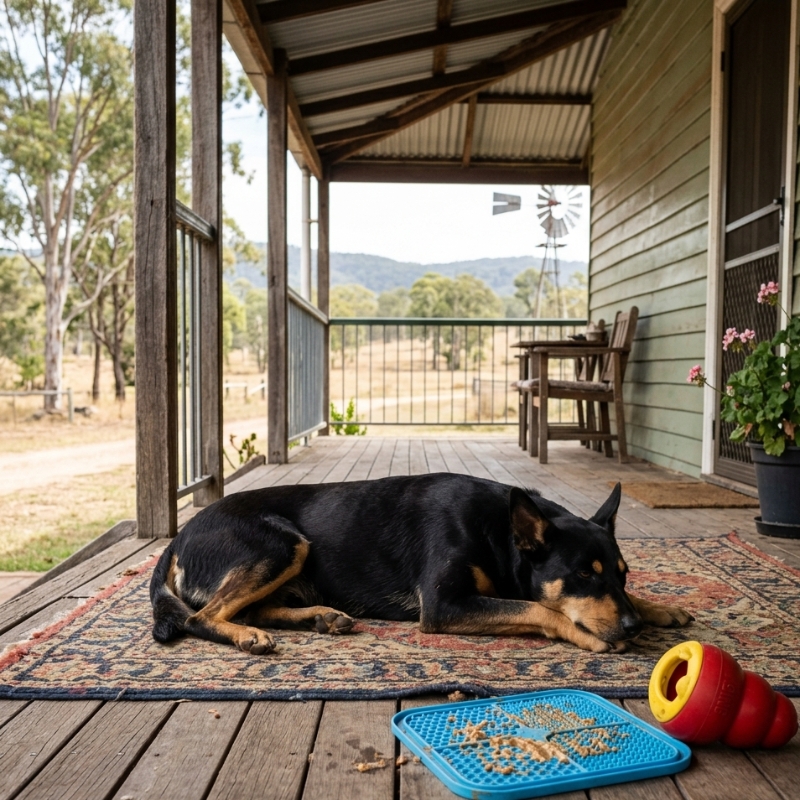
• Stuff a silicone lick mat with chilled yoghurt and mashed banana.
• Freeze low-sodium broth in a puzzle toy for slow licking.
• Scatter a handful of kibble across the lawn so your dog can forage.
These activities tap into natural instincts and keep the mind busy without spiking adrenaline.
3. Create a Consistent Home Routine
Dogs feel safer when they can predict what happens next. Try to:
- Feed meals at roughly the same times each day.
- Keep walks, play and quiet time in a familiar order.
- Announce departures and returns with a calm verbal cue such as “Back soon” or “Home now”.
A stable routine is particularly important for farm dogs that must adapt to unpredictable machinery noise or livestock movement.
4. Pair Noise Desensitisation With Counter-Conditioning
Queensland’s storm season can turn a relaxed dog into a trembling shadow. Gradual sound exposure paired with rewards teaches the brain that thunder equals good things.
| Step | What You Do | Why It Works |
| 1 | Play a recorded storm at very low volume while your dog rests | The noise stays below the anxiety threshold |
| 2 | Offer a high-value treat every few seconds | Builds a positive association |
| 3 | Increase volume slightly over several sessions | Allows controlled adaptation |
| 4 | If signs of stress appear, drop volume back and slow the pace | Prevents sensitisation, keeps training humane |
5. Introduce Calming Scents and Pressure Products Thoughtfully
Lavender, chamomile and Adaptil dog-appeasing pheromone diffusers can reduce mild tension. Pressure wraps like Thundershirts apply gentle, even pressure that some dogs find soothing.
Safety tips
• Observe your dog’s body language the first few times a scent or wrap is used.
• Remove the product if scratching, head shaking, or escape behaviour appears.
• Never rely on products alone. They are support tools, not standalone fixes.
6. Practise Marker-Reward Relaxation Training
Unlike basic obedience, relaxation training reinforces calm body language.
- Sit quietly near your dog with a handful of pea-sized treats.
- The moment you see a relaxed signal such as a sigh, soft eye blink or weight shift onto one hip, mark it with a clicker or the word “Yes”.
- Deliver the treat slowly so you do not startle your dog.
Over time, the dog learns that calm pays better than frantic energy.
7. Trial Interactive Feeding Over Standard Bowls
Eating from a slow feeder or snuffle mat can lower heart rate and extend meal time from 30 seconds to 10 minutes. The mental focus required mimics foraging, which naturally releases dopamine and serotonin.
| Feeding Method | Mental Effort | Typical Meal Duration | Best For |
| Standard stainless bowl | Very low | 30–60 seconds | Dogs with no anxiety issues |
| Slow-feeder bowl | Moderate | 4–6 minutes | Fast eaters, mild worriers |
| Snuffle mat or scatter feeding | High | 8–12 minutes | High-energy or anxious dogs needing nose work |
| Frozen puzzle toy | Very high | 10–20 minutes | Crate training, post-surgery rest |
The goal is not to frustrate your dog, so choose a puzzle level that matches experience.
8. Identify Mild, Moderate and Severe Anxiety Early
If you are unsure whether to DIY or call in a pro, the table below can help clarify urgency.
| Observable Sign | Likely Level | Suggested Next Step |
| Occasional yawning, lip licking during new experiences | Mild | Continue home techniques, monitor for change |
| Daily pacing, whining when left alone, refuses food in storms | Moderate | Add a personalised plan, speak to your vet about supplements |
| Continuous panting, self-injury, destructive escape attempts | Severe | Book a vet check to rule out medical causes, then a behaviour consult ASAP |
9. Know When to Seek Professional Help
If anxiety persists beyond a few weeks, worsens or involves aggression, owners often feel stuck. Degilbo has limited immediate access to veterinary behaviourists, so starting the booking process early is wise. Engaging a certified trainer who uses force-free methods ensures the plan is humane, measurable and adapted to your dog’s lifestyle. Our recent post on anxiety training for dogs explains how tailored sessions work and the kind of progress to expect.
Anxiety can also stem from pain, thyroid issues or cognitive decline in senior dogs. A full veterinary check, including blood work, helps rule out medical contributors. The RSPCA Knowledgebase stresses that behaviour change is most effective when health concerns are addressed first.
Common Mistakes to Avoid
- Punishing anxious behaviours – scolding a trembling dog confirms the world is scary.
- Flooding with exposure – forcing a dog to “deal with it” can trigger shutdown or aggression.
- Mixing sedatives and training without vet guidance – medication dosage and timing affect learning.
- Inconsistent household rules – one family member sneaking cuddles on the couch while another forbids it creates confusion.
Decision-Making Checklist Before Your Next Step
• Have you tried at least two low-stress enrichment methods consistently for two weeks?
• Is your dog’s exercise balanced between mental and physical outlets?
• Has your vet ruled out pain or hormonal issues?
• Do you understand the difference between desensitisation and outright exposure?
• Are you keeping a short diary to track triggers and improvements?
If any answer is “no”, address that gap first. If all are “yes” and anxiety remains, professional guidance can help fine-tune the plan.
FAQs
1. Does my dog need medication for anxiety?
Medication is one tool, not a cure-all. Vets may recommend short-term aids for severe cases or long-term support for chronic issues. Behaviour modification should still continue alongside any prescription.
2. How long will it take to see improvement?
Mild cases often show progress within a fortnight of consistent practice. Moderate to severe anxiety may take months because the brain needs repeated safe experiences to rebuild new pathways.
3. Are certain breeds more prone to anxiety?
Working breeds such as Border Collies and Kelpies can become anxious if their high mental needs are unmet, but any dog can develop anxiety through genetics, lack of socialisation or traumatic events.
4. Can I leave an anxious dog at a boarding kennel?
Boarding is possible with gradual preparation, familiar bedding and pre-stay visits. Choose facilities that offer individual care plans rather than one-size-fits-all routines.
5. Is crate training helpful or harmful?
When introduced gradually with positive associations, a crate becomes a safe retreat and can reduce anxiety. Forcing a dog into a crate without preparation can have the opposite effect.
Wrapping Up
Helping an anxious dog is rarely about one miracle product or a single training session. It is a series of small, consistent changes that show your dog the world can be predicted and safe. Start with simple home techniques, keep records of what works and be ready to seek professional input when progress stalls. A calmer, more confident companion is well worth the patience, and each success story starts with the first quiet sigh of relief from your best mate.