



Board-and-Train vs Weekly Dog Training Classes: Which Suits Your Dog?
When your dog needs training, the real question usually isn’t whether to train them; it’s how. Do you send them to live with a trainer for an intensive block, or take them to weekly classes and do the work yourself? Both can get results, but they suit very different dogs and very different owners. At The Mutts Nuts, we run board-and-train (also called stay-and-train) from our farm near Degilbo in Queensland, and we also understand where weekly classes shine. This guide compares the two honestly on how they work and which suits your dog, so you can choose the format that will actually work for you and your dog.
| Quick answer: Board-and-train means your dog lives with a trainer and is trained daily; weekly classes mean you train your dog at home between lessons. Board-and-train usually delivers faster, more consistent results and suits busy owners or anxious and rescue dogs; classes suit owners with time to practise daily. Your dog’s temperament decides the best fit. |
How board-and-train works
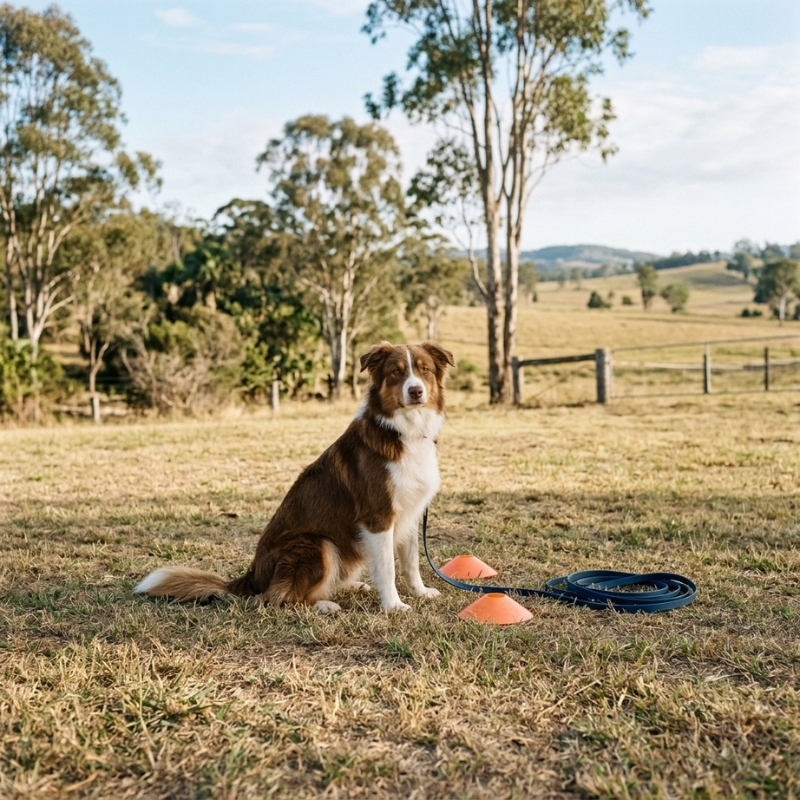
With board-and-train, your dog comes to stay and is trained every day by an experienced trainer in a structured, consistent way. Instead of one lesson a week, your dog gets daily, hands-on training built into a calm routine, which is why results often come faster and stick more reliably. On our Degilbo farm, that training happens in a settled, low-stress environment with space to move, which suits dogs who learn best when they’re relaxed rather than overwhelmed. The trainer does the heavy lifting of teaching the behaviours, and just as importantly, there’s a handover at the end so you know how to keep the training going at home. That combination, daily professional training plus a proper handover, is what makes our board-and-train program such a good fit for busy owners who don’t have time for daily practice, and for anxious or rescue dogs who benefit from consistent, calm handling. Your dog effectively gets a head start, and you get a dog who’s already learned the behaviours by the time they come home, rather than starting from scratch yourself. It’s often easier on your dog too, who learns in a calm, focused setting without the distractions of a busy class.
How weekly classes work
Weekly classes work the other way around: you and your dog attend a lesson once a week, and you do the training at home in between. The trainer shows you what to work on, and the real progress happens through your daily practice across the week. This owner-led approach can work really well, but it asks more of you, because the results depend on how consistently you practise between lessons. Progress tends to be slower than an intensive board-and-train block, simply because the dog is learning in small weekly increments rather than daily immersion. Classes suit confident, sociable dogs who cope well in a group setting, and owners who genuinely have the time, energy and consistency to put in the daily work. There’s a lot to be said for it, because you learn the handling skills alongside your dog and build the relationship yourself. But it’s honest to say it works best when you can commit to the between-class practice, since without that steady daily repetition, weekly classes can stall and the training doesn’t stick. For the right owner, though, that hands-on involvement is part of the appeal, and there’s real satisfaction in doing the training together.
Which is right for your dog?
The best format really comes down to your dog’s temperament and your own situation. Here’s a simple way to compare them side by side:
| Board-and-train | Weekly classes | |
|---|---|---|
| Who does the training | An experienced trainer, daily | You, with weekly guidance |
| Time you need | Minimal during the stay, then upkeep at home | Daily practice between lessons |
| Speed of results | Usually faster, from daily immersion | Slower, built up week by week |
| Best for | Busy owners, anxious or rescue dogs | Confident dogs, hands-on owners with time |
If you’re weighing it up, our guide on when to choose stay-and-train goes deeper into the decision, the kinds of dogs each format suits, and the behaviours each tends to handle best.
When we’d recommend board-and-train
We’d usually suggest board-and-train if your schedule is full and you can’t realistically commit to daily practice, if your dog is anxious, reactive or a rescue who needs calm, consistent handling, or if there are specific behaviours you want addressed properly and without dragging it out over months. It’s the option that does the intensive work for you and sends your dog home already knowing the behaviours, with a handover so you can keep them up.
When classes make more sense
Weekly classes can be the better fit if you have a confident, sociable dog, you enjoy being hands-on, and you genuinely have the time to practise every day. If learning the handling skills yourself is part of what you want, and your dog copes well in a group setting, classes let you build that bond and those skills together at a steadier pace. For the right dog and the right owner, that slower, shared approach is genuinely rewarding.
Related reading
Still not sure which way to go? For more on matching the method to your individual dog, including temperament, age and the behaviours you’re working on, see our piece on choosing the training format that fits your dog. It’s a useful next step before you decide, and it complements the comparison above. Every dog is a little different, so the best choice is the one that fits both your dog’s temperament and the time you can realistically give.
Frequently asked questions
Is board-and-train worth the money?
For many owners, yes, because you’re paying for daily professional training and faster, more consistent results than weekly practice usually delivers. It’s especially worth it for busy people without time to train daily, and for anxious or rescue dogs. Whether it’s right for you depends on your dog and your schedule, so it’s worth a chat first.
Will my dog forget the training when it comes home?
Not if the handover is done well, which is why it matters so much. At the end of the stay we show you how to maintain the behaviours and keep the routine going at home, so the training carries over. Dogs do need consistency from you afterwards, but a good handover sets you both up to keep it up.
Is board-and-train ok for anxious or rescue dogs?
Often it’s especially good for them. Anxious and rescue dogs tend to thrive on calm, consistent handling and a settled routine, which is exactly what a structured farm-based stay provides. The key is a patient, reward-based approach in a low-stress environment. We’d always talk through your individual dog first to make sure it’s the right fit.
Final thoughts
Board-and-train and weekly classes are both good ways to train a dog, and the right one comes down to your dog’s temperament and how much time you can commit. If you’re busy, or your dog is anxious or a rescue who needs calm, consistent handling, board-and-train does the intensive work for you. If you’ve got the time and a confident dog, classes let you learn together. Not sure which suits your dog? Have a chat with us about our board-and-train program and we’ll help you decide.
| Book your dog in. Not sure which training format suits your dog? Get in touch about our board-and-train program and we’ll help you choose. |