



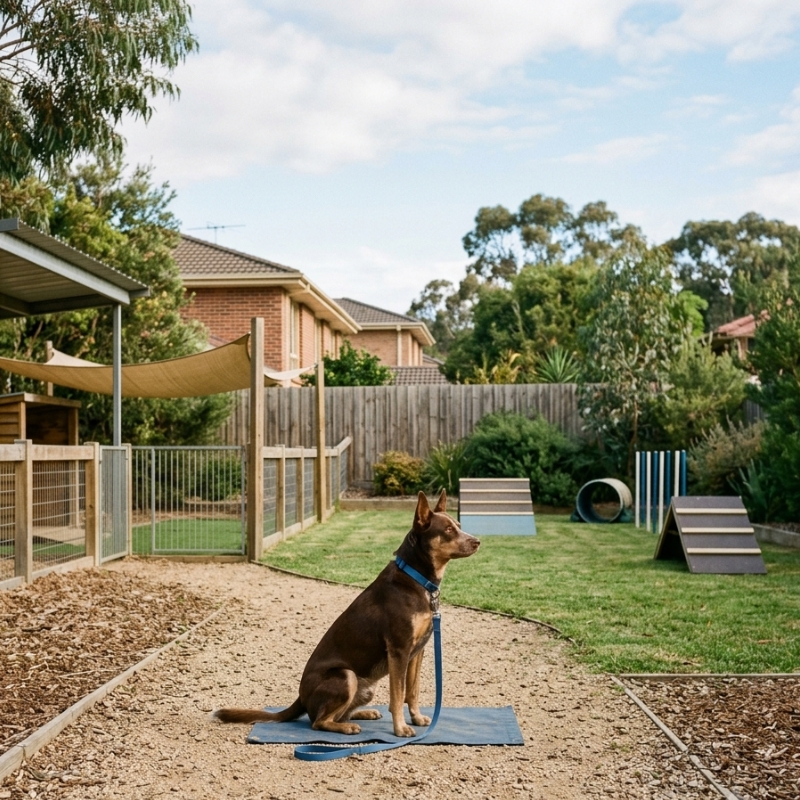
When Should You Choose Stay-and-Train Dog Training?
A fresh start away from home
Some behaviour issues refuse to budge when a dog practises them every day in the same lounge room, the same backyard and the same park. A stay-and-train program breaks that loop. Your dog lives at a trainer’s facility for a set period, learns new habits in a distraction-managed environment and then transfers the skills back home. At The Mutts Nuts, we focus squarely on stay-and-train, so the question we hear most is simple: when is this format the smarter option?
Early in the decision process, many owners compare group classes, private lessons and residential programs. Each suits different goals. If you need a primer on the fundamentals, our overview of the Stay & Train program covers methods and pricing factors in detail. The rest of this article zooms in on stay-and-train timing.
How the model actually works
Residential training is not a holiday kennel with a few ten-minute lessons tacked on. Your dog follows a structured daily routine: exercise, obedience sessions, problem-behaviour drills, rest and measured play. Consistency is the power tool here. Trainers can repeat a cue dozens of times in a controlled setting, speeding up pattern recognition that might take weeks at home.
Programs usually run from ten days to six weeks. Puppies often slot into the two-week bracket, while adult dogs needing behaviour modification lean towards the longer end. Hand-over lessons for the owner bookend the stay so you can maintain the new rules at home.
Signs your dog is not coping with the weekly class format
Certain situations suggest group classes alone may not cut it. If any of these points feel familiar, a stay-and-train block can save months of frustration.
• Your dog rehearses unwanted behaviours daily – chasing bikes, fence-running, or ignoring recall – and you can’t control the stimulus.
• Work or family rosters leave you with tiny training windows, making it hard to string together consecutive sessions.
• You need results before a non-negotiable deadline, such as a new baby arriving or a move into pet-restricted housing.
• Safety is at stake. Lunging at strangers, resource guarding or full-blown dog aggression demand professional management in a secure setting.
• Mobility limits stop you practising physically intense drills like long-line recalls or impulse-control games.
A stay-and-train environment removes the everyday triggers so the trainer can introduce behaviours in a calm headspace, then layer in controlled distractions. It also demonstrates how basic dog training can help stop unwanted behaviours by building impulse control and teaching the dog how to respond appropriately. Owners often notice the biggest shift in impulse control – the dog learns how to learn.
Lifestyle factors owners sometimes overlook
Queensland’s climate helps training stick when dogs spend plenty of time outdoors, but heatwaves can derail afternoon sessions at home. Professional facilities include shaded runs, cool indoor areas and early-morning exercise blocks, allowing consistent work even during summer spikes.
Travel frequency matters too. If work sends you interstate every fortnight, booking regular private lessons is pointless – progress stalls between visits. A concentrated residential stint takes advantage of the weeks you’re away anyway.
Budget plays a role, yet comparing the dollar figure to ongoing damage or potential injury often reframes the spend. Replacing chewed decking or settling vet bills after a dog fight rarely works out cheaper than a program that prevents the issue.
Finally, be honest about human temperament. If you feel tense, embarrassed or impatient when training in public, your body language can fuel the very reactivity you hope to fix. Handing the reins to a calm professional for the first phase lets you step back in once the dog understands the cues.
What realistic outcomes look like
Stay-and-train is a jump-start, not a silver bullet. You can expect:
• Fluent basic cues: sit, down, place, recall and loose-lead walking under moderate distraction.
• A calmer default state. Dogs learn to settle on a mat rather than pace or demand attention.
• Reduced rehearsal of the original problem behaviour; often it disappears entirely in the facility.
• A clear maintenance plan so the new habits survive the transition home.
The transfer session is crucial. Owners should rehearse the commands, practise releasing and rewarding, and learn marker words that match the trainer’s timing.
Questions to ask before you commit
Residential programs vary widely. Pin down these details before signing up.
| Aspect | What to Clarify | Why It Matters |
| Daily schedule | Number of formal sessions, rest breaks, enrichment time | Structure signals professionalism and animal welfare |
| Training methods | Positive reinforcement, balanced, or compulsion-based | Must align with your ethics and your dog’s temperament |
| Handler transfer | How many hand-over lessons, written plan included? | Critical for long-term success |
| Facility access | Can you tour the grounds? Are runs climate-controlled? | Transparency builds trust |
| Support after pickup | Phone or video check-ins, refresher lessons | Helps you troubleshoot new challenges |
The aim is to leave with the knowledge and confidence to maintain behaviours without feeling abandoned.
Making the call
Choose stay-and-train when the behaviour problem is ingrained, time is short, safety is shaky or consistency at home is impossible. Puppies in their socialisation window benefit too; ten packed days can hard-wire positive associations that last for life.
Owners who treat the program as a partnership – trainer designs, dog learns, human maintains – see the strongest results. Queensland families juggling shift work, school sport runs, and tropical summer storms often discover residential training slots neatly into their calendar where weekly classes never could.
For a broader perspective on responsible ownership, the Queensland Government’s guide to dog training and behaviour outlines your obligations under state law.
With clear goals, honest self-assessment and the right questions, stay-and-train becomes more than convenient boarding. It’s a strategic reset that gives both dog and owner a fresh set of habits – and a fair shot at lifelong harmony.