


Rescue Dog Decompression: How to Help Your Newly Adopted Dog Adjust, Relax and Feel Safe
Bringing a rescue dog home is equal parts excitement and unknowns. Even the friendliest pup can feel overwhelmed by new sights, scents, and routines. Behaviour specialists call the first fortnight the “decompression period” because your dog’s nervous system is easing out of shelter mode and into family life. Giving the dog space, structure, and calm guidance now sets up success later, whether you simply want a happy housemate or plan to refine manners through professional dog training.
Below you will find a practical two-week framework, real-world examples from regional Queensland homes, red-flag behaviours that suggest extra help is needed, and gentle tips to avoid common missteps. Use it as a guide, not a rigid rulebook, and always adapt to your individual dog’s body language.
1. Why Rescue Dogs Need a Decompression Period
Dogs in shelters often bounce between environments, routines, and people before landing in their forever home. This constant change can flood the body with stress hormones such as cortisol and adrenaline. A decompression period lets those hormone levels taper off so learning, bonding, and reliable behaviour become possible.
How Stress Shows Up in Newly Adopted Dogs
• Panting or pacing even in a cool, quiet room
• Startling at everyday household noises
• Hiding behind furniture or under tables
• Growling or snapping when cornered or touched unexpectedly
• Seeming “shut down” or unresponsive to cues
Stress is not misbehaviour. It is a coping strategy. By responding with patience rather than pressure, you teach your dog that home is safe.
2. The 3-Phase Decompression Framework (First 14 Days)
Each dog moves at their own pace, but most settle faster when owners combine structure with choice. The table below outlines a simple timeline.
| Phase | Typical Duration | Dog’s Experience | Owner’s Focus | Watch For |
| Settling-In | Days 1-3 | Keep interactions calm, set up a quiet retreat zone, and stick to short, positive outings | Keep interactions calm, set up a quiet retreat zone, stick to short, positive outings | Loss of appetite, trembling, vocalising at night |
| Trust-Building | Days 4-10 | Testing small freedoms, observing household rules | Learning the layout, unfamiliar smells, and unpredictable sounds | Over-arousal during play, resource guarding emerging |
| Confidence-Growing | Days 11-14+ | Exploring new environments with curiosity | Introduce predictable routines for meals, toilet breaks, and gentle play | Regression in house-training, sudden fear of certain family members |
No phase is locked to the calendar. If your dog stalls in Phase 1, extend that stage rather than rushing forward.
3. Preparing Your Home Before Pick-Up Day
Moving day is smoother when you line up these essentials:
- Safe zone
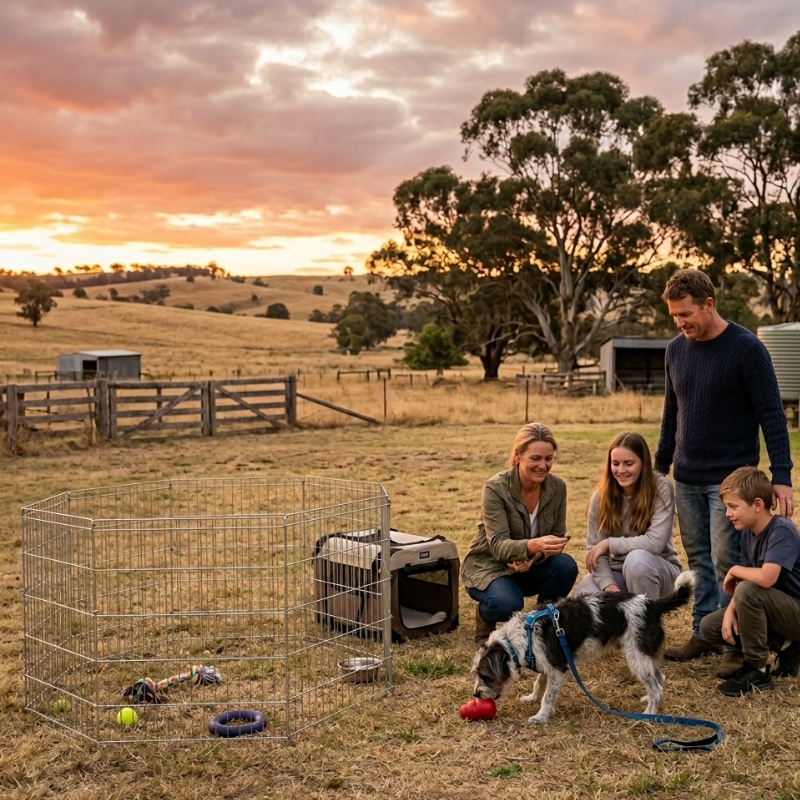
Create a playpen or gated area with a bed, water, and a chew toy. In rural Degilbo homes, a quiet laundry or closed-off verandah often works better than the bustling kitchen. - Consistent toileting area
Decide where outdoor toileting should happen. For acreage properties, choose a patch close to the house first; large paddocks can be distracting early on. - ID and microchip check
Update contact details with the microchip registry and attach an engraved tag before the first walk. - Familiar-smell comforter
Ask the rescue group for a blanket or toy that smells like the shelter mates. This transitional scent can lower first-night anxiety.
4. Day-by-Day Guide: First 72 Hours
Day 1: Arrival
• Walk the dog around the property on a leash before entering the house.
• Allow sniffing of each room, but keep other pets away for now.
• Offer water and a small meal; skip heavy treats if the stomach is nervous.
Day 2: Observation
• Keep outings low-key. Short leash walks around the boundary or driveway suffice.
• Introduce family members one at a time, seated side-on, avoiding looming over the dog.
• Mark and reward calm behaviours with soft praise or a gentle pat.
Day 3: Gentle Routine
• Feed at the same times as Day 2 to build predictability.
• Begin a simple “name game”: speak the dog’s name, toss a treat when they glance at you.
• Record toileting times to spot patterns and prevent accidents indoors.
5. Setting Realistic House Rules Early
Dogs do not understand “just this once”. Decide rules on day one and stick to them.
| Rule Area | Common Confusion | Consistent Alternative |
| Furniture access | Letting the dog on the couch during a storm “just tonight” | Allowing jumping when wearing farm overalls, but scolding when in office clothes |
| Door greetings | Allowing jumping when wearing farm overalls but scolding when in office clothes | Teach a default “sit to say hi” every time someone walks in |
| Food boundaries | Handing table scraps while cooking | Feed meals in a separate room and clear plates before the dog re-enters |
Consistency shortens the learning curve, especially for dogs that have bounced through multiple rule books.
6. Introducing Other Pets Without Drama
Degilbo properties often include chickens, horses, or working dogs. Rushing introductions can trigger prey drive or competition.
- Swap Scents
Before face-to-face meetings, rub each animal with separate cloths and leave the scent cloths near the other’s bed. - Controlled Visuals
Let animals see each other through a baby gate or crate first, rewarding relaxed body language. - Parallel Walks
On neutral ground, such as a driveway, walk dogs side by side several metres apart. Gradually close the gap if both stay loose-leashed. - Short Indoor Sessions
Bring the resident pet into a large room, keep both on leads, and scatter treats. End on a calm note within five minutes.
Signs you have moved too fast include raised hackles, fixed staring, or stiff, low tails. Go back a step rather than forcing tolerance.
7. Reading Body Language Like a Pro
Being able to spot stress signals earlier than a growl prevents escalation. Below is a quick refresher.
| Signal | Possible Meaning | Best Response |
| Yawning when not sleepy | Diffusing tension | Pause interaction, give space |
| Lip-licking outside mealtimes | Nervous anticipation | Soften voice, slow movements |
| Whale eye (seeing the white of the eye) | Feeling cornered | Turn body side-on, avoid direct reach |
| Shaking off as if wet | Releasing tension after stress | Offer calm praise, allow dog to settle |
If a string of stress signals continues despite adjustments, consider seeking guidance from a force-free trainer.
8. Common Mistakes New Owners Make (and Simple Fixes)
| Mistake | Why It Backfires | Safer Alternative |
| Inviting every neighbour over on day one | Floods dog with unfamiliar stimuli | Space visitors across two weeks, cap at two guests per day |
| Using the leash indoors to “keep control” | Increases tension and can create leash reactivity | Use baby gates to manage movement without restraint |
| Leaving free-choice food bowls | Hard to monitor appetite or guard against overeating | Scheduled meals allow you to spot stress-linked refusal early |
| Punishing first accident inside | Associates you with fear, not house-training | Interrupt gently, lead outside, reward correct spot |
9. When to Start Structured Training
Informal bonding games begin immediately, but formal lessons can wait until the dog feels secure enough to learn. Typical indicators that a dog is ready include:
• Approaches you voluntarily for pats
• Maintains focus for 30 seconds without distraction
• Eats treats with normal enthusiasm outside the safe zone
Many rescue dogs benefit from anxiety-sensitive programs. The Mutts Nuts covers these in detail in anxiety training for dogs, including how gradual desensitisation works alongside positive reinforcement.
A professional trainer can also help if any of the red-flag behaviours below emerge:
Red-Flag Behaviours
• Escalating resource guarding (growling over toys, food, or space)
• Persistent, uncontrollable barking at routine noises
• Repeated attempts to escape even after the routine settles
• Sudden aggression toward household members or pets
10. Short Activity Menu for the First Fortnight
| Activity | Goal | Duration |
| Snuffle mat feeding | Mental enrichment without high energy | 10 minutes, twice daily |
| Scatter feeding in the yard | Encourage relaxed sniffing, lowers cortisol | 5-10 minutes after morning toilet |
| Treat-trail treasure hunt | Builds optimism and room exploration | Once daily, vary locations |
| Name-response game | Foundations for reliable recall | 3 short sessions, 5 treats each |
| Settle on mat | Encourage relaxed sniffing, which lowers cortisol | Introduces a stationary calm cue |
Keep sessions brief and end before the dog disengages. Ending on success keeps confidence high.
11. Local Considerations for Degilbo and Rural Queensland Homes
- Heat and humidity
Rescue dogs from southern states may struggle with Queensland’s warmer nights. Offer cool tiles, shade cloth runs, and avoid midday walks. - Wildlife distractions
Wallabies and wild turkeys can trigger chase instincts. Use long-line leads when practising outdoor recall until reliability improves. - Farm machinery noise
Gradually desensitise dogs to quad bikes or tractors by pairing distant engine sounds with high-value treats before you drive closer. - Vet access distance
Country clinics may book out days ahead. Schedule a routine check-up within the first month while the calendar is still flexible.
12. Questions to Ask Yourself Before Taking the Next Step
Reflecting honestly keeps progress on track:
- Is my dog eating, sleeping, and toileting regularly?
- Do I understand at least three stress signals my dog shows?
- Can my dog settle calmly for five minutes without physical contact?
- Have all family members agreed on the same rules and cues?
- Do I have a plan if behaviour regresses during storms, fireworks, or harvest machinery noise?
If any answer is “not yet”, that is the next area to focus on before adding new challenges.
13. Frequently Asked Questions
1. How long does decompression really take?
Every dog is different. Many rescue dogs show visible relaxation within two weeks, but deeper confidence can build over months. Gauge progress by behaviour patterns, not a calendar date.
2. Should I crate my rescue dog at night?
If the dog has a positive crate history, it can speed toilet training and provide security. For dogs that panic when confined, use a larger pen or gated room instead.
3. Is it normal if my rescue dog will not eat for a day or two?
Mild appetite dips are common. Offer smaller, smelly meals like sardine-mixed kibble. If refusal lasts beyond 48 hours or the dog shows lethargy, book a vet check.
4. When can I introduce off-leash park visits?
Wait until you have reliable recall in low-distraction settings and the dog is fully vaccinated. Rural owners often use fenced footy ovals after hours to practice before busy dog parks.
5. Where can I find more official advice on adopting rescue dogs?
The RSPCA advice page covers welfare-based guidelines on settling, feeding, and early vet care after adoption.
Final Thoughts
Welcoming a rescue dog is less about quick results and more about steady relationship building. By offering structure, choice, and gentle guidance during the decompression window, you equip your new mate with the security needed to blossom into a relaxed companion. If challenges linger or behaviours escalate, early input from a reward-based professional can prevent small hiccups from becoming entrenched habits, letting both of you enjoy the adventure ahead.